

Live Chart Of USD/HKD
1. Understanding the Basics of USD/HKD Trading
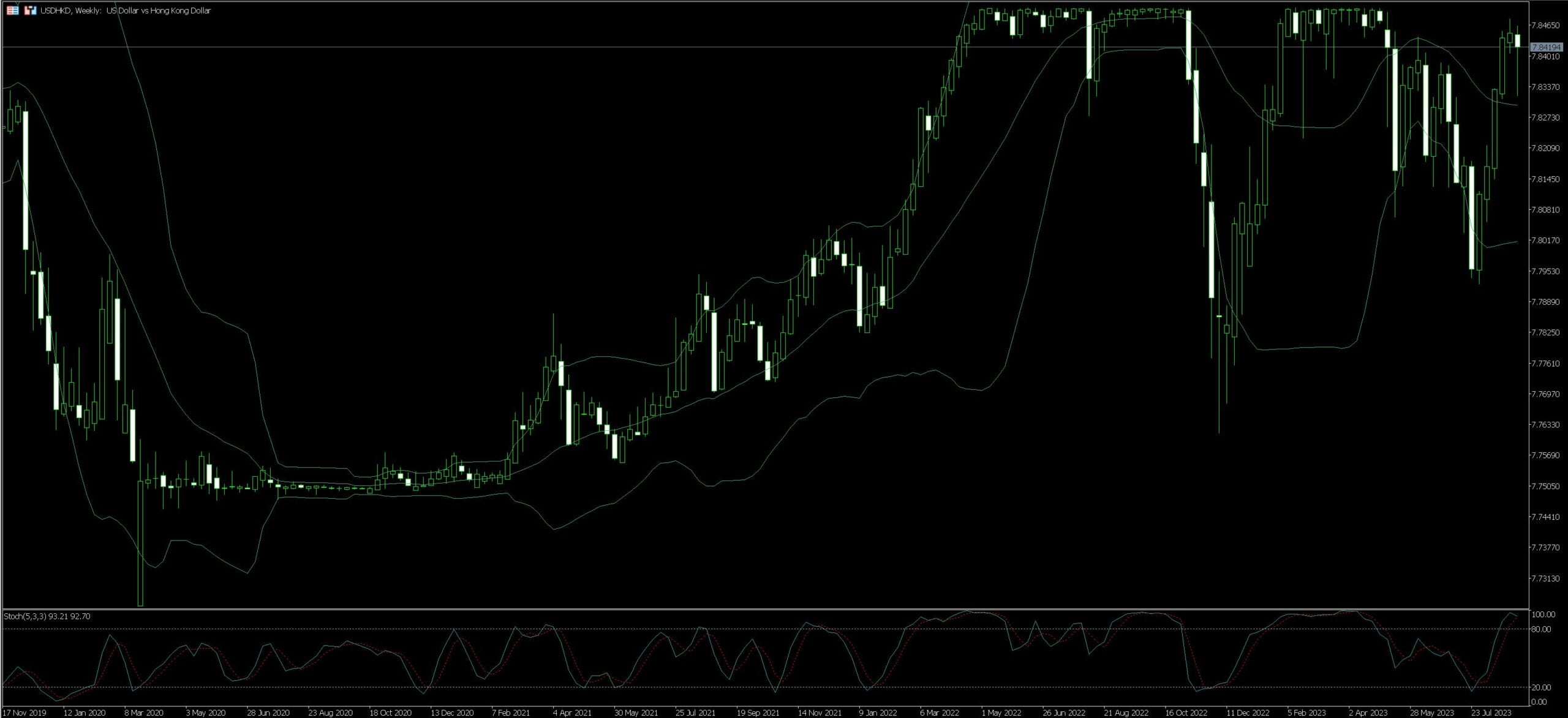
USD/HKD trading refers to exchanging the United States Dollar (USD) with the Hong Kong Dollar (HKD). It is a common currency pair in forex trading, attracting numerous global traders due to its high liquidity and volatility. This pair’s price fluctuation is significantly influenced by the economic performance of the USA and Hong Kong, making an understanding of these respective economies crucial for successful trading.
To start trading USD/HKD, thorough market research is imperative. Fundamental and technical analysis contribute to better comprehension of market movements and trends. Fundamental analysis involves studying economic data, such as GDP growth rates, employment figures, and political events that can impact the USD/HKD exchange rate. In contrast, technical analysis focuses on historical price patterns and trading volume data for predicting future price movements.
Studying these economic indicators in real-time is equally important. Interest rate decisions by the Federal Reserve (Fed) and the Hong Kong Monetary Authority (HKMA), for instance, can sway the USD/HKD trading pair quite significantly. Higher interest rates can heighten a currency’s allure, causing its exchange rate to appreciate. Conversely, lower rates typically lead to depreciation.
Risk management should form a key element of any USD/HKD trading strategy. One popular approach is setting stop-loss and take-profit levels. A stop-loss order helps limit potential losses if the market goes against your prediction, whereas a take-profit order automatically closes your position when the price hits a certain level in your favour.
Moreover, understanding leverage and its influence in forex trading can be invaluable. Forex brokers often provide leverage, which allows traders to control a larger position than the amount they have invested. While it can magnify profits, it can also amplify losses if the market moves in the opposite direction.
Monitoring economic calendars for upcoming events impacting the USD and HKD further increases the chances of executing successful trades. Remembering that the USD/HKD exchange rate responds to the economic health and geopolitical factors unique to each nation, including trade balances, political stability, and economic policy changes, is imperative.
Regular market analysis and updating trading strategies accordingly can aid traders in navigating the USD/HKD forex trading waters and help them effectively respond to opportunities and threats in the marketplace. Clear comprehension of these basics can pave the way for more profiting and less risky USD/HKD trading experiences.
1.1. Definition of USD/HKD Trading
Trading USD/HKD refers to the act of buying, selling, or exchanging the US Dollar against the Hong Kong Dollar- two of the world’s dominant currencies. This may be carried out by various participants including individuals, corporations, and institutions. The value of the USD/HKD currency pair is determined by comparison of the respective value of these two currencies on the foreign exchange (forex) market. Even minor fluctuations in their comparative values can present significant trading opportunities. The USD/HKD forex trading involves a particular level of complexity since it often relies on careful analysis of both the American and Hong Kong economies. Strong understanding of market trends, economic indicators, and global market news is fundamental for proficiency in USD/HKD trading. With correct comprehension of these key factors and the right set of strategies, traders can earn substantial profit effectively navigating through the USD/HKD Forex market. However, this market also presents certain risks. Thus, a robust risk management strategy is pivotal in avoiding potential capital loss.
1.2. Importance of the USD/HKD Pair
The USD/HKD currency pair plays a vital role in the financial market that prompts the astute eye of global traders. Representing the pairing of the United States Dollar and the Hong Kong Dollar, this foreign exchange pairing provides lucrative opportunities for savvy traders. Unwavering attention to the status quo of influential economies, the prowess of the US, and vibrant Hong Kong, paves the way for precise market predictions.
The USD, the world’s primary reserve currency, affects many sectors, including global commodities trading, where most products are priced in dollars. As such, fluctuations in the US economy have wide-ranging effects felt across the global market landscape. Being abreast with those changes allows traders to make informed speculations and devising successful trading strategies.
In the same vein, the HKD offers its unique leverage. As one of the world’s leading international financial centres, Hong Kong plays a critical role in the global economy. That makes its currency an essential element to monitor for keen traders. The stability of HKD, due to the currency board system, makes it an attractive option for risk-averse traders.
Exactly, the dance between these two currencies, the strong USD and the steady HKD, creates enticing market volatility. This balance rivals within risk and stability produces a currency pair brimming with potential. Meticulously staying ahead of the financial news, geopolitical happenings, and macroeconomic data related to these two economies can offer traders a competitive edge when trading the USD/HKD pair. Therefore, this pair rightfully demands traders’ salient attention and analytical prowess.
1.3. Factors Influencing the USD/HKD Exchange Rate
The USD/HKD exchange rate is a subject of some complex influences including economic indicators, geopolitical events, and market psychology. Every trader should be aware of these factors. Each holds a unique power to swing the currency pair exchange rate and erode or enhance a trade’s profitability.
Economic Indicators:These refer to key statistics about the economy that allow analysis of economic performance and predictions of future performance. In the USA, these may include data like inflation rates, interest rates, GDP, unemployment rates, and others. For instance, if data reveals that inflation is rising at a rapid rate, this could devalue the dollar and thus impact the USD/HKD exchange rate.
Geopolitical Events: These are events that occur in the intersection of politics and geographical boundaries—things like elections, war, trade disputes, and treaties. These events can cause pronounced volatility in the USD/HKD currency pair. An example may be the escalation of trade tensions between the U.S. and China causing traders to sell off USD in favour of the ‘safe-haven’ HKD.
Market Psychology: This includes the overarching sentiment or feeling that traders have toward a particular currency at any given time. It comprises multiple factors such as trends, trader perceptions, and technical analysis. Bullish sentiment for USD can push up its value, inflating the USD/HKD exchange rate, while bearish sentiment can trigger devaluation.
Understanding of these factors will not only help make accurate predications on the future currency exchange rate trends but will also provide a solid foundation for decision-making strategy while trading on USD/HKD currency pair.
2. Strategies to Maximise Profits in USD/HKD Trading

When trading the USD/HKD pair, a comprehensive knowledge of both currencies and their drivers is crucial. Understanding Key Economic Indicators can aid in predicting the currency pair’s future movements. Fundamental analysis, which includes monitoring GDP, inflation rates, interest rates, and other economic indicators, forms a solid foundation for fx trading decisions. In the process, paying attention to the influence of the US Federal Reserve and the Hong Kong Monetary Authority’s policy decisions can offer valuable insights as well.
Technical Analysis is another strategy to maximize profitability. Chart analysis and understanding of trading patterns could prove beneficial for short-term trades. Emphasis should be on pinpointing potential entry and exit points, identifying trends, and setting stop-loss orders. The use of technical indicators like Moving Averages, Relative Strength Index (RSI), and Bollinger Bands can help to identify market trends and volatility.
Furthermore, a well-structured and disciplined approach is key. Risk Management is indispensable in any form of trading. Adopting strategies such as setting stop-loss orders, diversifying your portfolio, and never risking more than a small percentage of your capital on a single trade, can limit potential losses. Remember, risk and reward are inseparable in trading.
Another aspect to consider in maximizing profit in USD/HKD trading is Time management. It is essential to recognize the most volatile hours for this currency pair, which is typically during the US and Hong Kong market operating hours. Trading during these hours can leverage higher liquidity and volatility, yielding potential opportunities for profit.
Adopting Automated Trading Systems can also provide an edge. Such systems follow pre-set rules for trade entries and exits, risk management, and even strategies, executing trades automatically. This eliminates the role of emotion in trading decisions and can help preserve discipline.
While trading USD/HKD can be profitable, it is crucial to remember that probability and risk accompany every trade. An understanding of the economic factors impacting the pair, a solid trading plan, and discipline are fundamental to successful trading. By combining technical analysis with fundamental insights and meticulous risk management, traders can successfully navigate the dynamic forex market and potentially realize substantial profits.
2.1. Fundamental Analysis
Fundamental analysis plays a quintessential role in formulating your trading strategy for USD/HKD. It involves assessing the economic conditions that affect the valuation of both US and Hong Kong dollars. Key economic indicators such as GDP growth rate, inflation rate, political conditions, and geopolitical influences greatly impact the exchange rate between these currencies.
A thorough knowledge of these fundamentals can essentially provide traders with a strong backbone to understand the intrinsic value of these currencies, thereby permitting them to make informed decisions when trading USD/HKD. For example, if the United States announces an increase in interest rates, it generally leads to an appreciation of the US dollar in the foreign exchange market. This appreciation could be used as an opportunity to sell USD/HKD given that the price of the currency pair is expected to decrease.
Additionally, there is a strong correlation between the Hong Kong dollar and the US dollar due to the Linked Exchange Rate system established by the Hong Kong Monetary Authority. This system pegs the value of the Hong Kong dollar to the US dollar. Traders can take advantage of this intrinsic link when formulating trade strategies based on the essential economic indicators of both nations.
Economic calendars and news releases, often available free online, are excellent sources of real-time economic data. By incorporating this kind of data into your trading plan, you can react quickly to market changes, optimise your entry and exit points, and increase your trading accuracy. Observing historical trends and anticipating future ones through fundamental analysis, therefore, serves as an effective tool in your trading arsenal.
2.2. Technical Analysis
Technical analysis, a popular method commonly employed by traders, revolves around the utilization of past market data to forecast future market trends. Amid the vast set of tools offered to conduct technical analysis, specific approaches prove to be highly useful when spearheading trades involving the USD/HKD pair.
One of the paramount concepts underpinning technical analysis is the understanding of trends. Despite the market appearing to fluctuate randomly, upon closer examination, a trained eye will spot specific patterns forming, often known as trends. Traders utilizing these trends make decisions based on the direction of these patterns, deciding to buy or sell accordingly.
Charting tools are monumental in a trader’s arsenal. Traders often make use of support and resistance levels, important price levels that the market respects. Notable price changes happen when the market price of USD/HKD crosses these levels. Regular monitoring of these crucial levels allows them to act promptly when such breakouts occur.
Moving averages, another essential charting tool, enables the visualization of potential trends by smoothing out price movements. The SMA (Simple Moving Average) and EMA (Exponential Moving Average) are popular choices utilized by traders, both proficient in determining the momentum of the market.
The implementation of indicators further bolsters the technical analysis process, providing hints about potential market swings. For instance, indicators such as the Relative Strength Index (RSI) or the Bollinger Bands aid traders in discerning overbought and oversold market conditions, subsequently signaling prime trade entry or exit points.
Trading the USD/HKD pair can be a complex endeavor. But through the diligent application of technical analysis techniques, traders can arm themselves with reliable market insight, steering their endeavors towards profitable outcomes.
2.3. Risk Management
Risk management forms the bedrock of a pragmatic strategy when trading the USD/HKD pair. A smart move is to not risk over 2% of total equity on any single trade. Why? By limiting the risk to a firm figure, traders can sustain a run of losses without their potential for recovery being critically eroded.
Stop-loss orders become staunch allies in the endeavor for risk management. These orders work to preserve capital by automatically closing open positions once they breach a preset level of loss. But where to set these stops? Broadly speaking, conditions in the market or the trader’s comfort level should define stop-loss orders.
Market volatility plays an omnipresent role in trading USD/HKD. Keeping an eye on the economic calendar is thus essential, which alerts traders to the timing of major data releases, central bank announcements, or other market-moving events that could interrupt the trade.
Diversification, another cornerstone of risk management, must not be overlooked. By holding not just USD/HKD but a basket of different currency pairs, the exposure to any individual currency gets diffused – something that helps smoothen out return profiles.
Utilizing leverage with caution is also crucial. While leverage can significantly increase profit potential, improper use can lead to considerable losses. A balance must thus be struck.
Dealing with the psychological dimension of risk – manifesting in the form of fear or overconfidence, can’t be understated. Using a trading journal to track trades, successes, failures, and emotions are effective steps towards this end.
A comprehensive approach underpinned by risk management principles aids in navigating the tumultuous waters of USD/HKD trading.
3. Utilising Trading Tools To Gain An Edge
Gaining an edge in the USD/HKD market is not as straightforward as standing on toes. It requires a savvy set of skills, a deep understanding of the forex market, and most importantly, mandates the utilisation of the right set of trading tools. The most significant tool in a trader’s arsenal is technical analysis. Technical analysis involves evaluating past and current price movements to predict future market trends. Tools such as charts, trend lines, and indicators come in handy during this analytical process.
Charts are the primary visuals a trader uses to track market behaviour. Candlestick, bar, and line charts offer different angles of viewing price action and provide detailed insights into the market’s movements. Candlestick charts, for example, give information about the market’s open, high, low, and close points within a specific timeframe.
Trend lines, too, are essential trading tools, providing crucial clues about market movement. They help identify potential buy and sell points as they indicate the direction of the trend.
Indicators like Moving Averages (MA), Relative Strength Index (RSI), and Moving Average Convergence Divergence (MACD), are mathematical calculations based on price and volume history. They provide a visual representation of the market’s behaviour and aid in the prediction of potential price movements.
Forex economic calendars are fundamental analysis tools that traders use to track economic events that might impact currency pairs. They show the timings of data releases, speeches, and other market-moving events.
Risk management tools such as Stop Loss (SL) and Take Profit (TP) orders, are indispensable for every trader. They provide an effective way to manage potential losses and lock in profits when the market moves favourably.
Trading successfully on the USD/HKD pair is complex and challenging, primarily due to the currency pair’s volatility. Yet, it becomes manageable with the diligent use of trading tools. Understanding and leveraging these tools offers the potential to shape the dynamics of trading positively. Therefore, (avoiding the phrase ‘in conclusion’) the utilisation of trading tools provides traders with a viable way to navigate uncharted forex waters, churning unseen risks into tangible profits.
3.1. Live Charts and Market Data
Live charts and market data are indispensable tools in the arsenal of any successful trader, and are particularly beneficial when trading currency pairs like the USD/HKD (US Dollar/Hong Kong Dollar). Facilitating real-time access to market trends and fluctuations, these charts provide an essential snapshot of current market behaviour and historical data, offering valuable indicators for future movements.
Live charts furnish traders with a wealth of information. For example, they aid identification of key market trends, helping to discern possible buying or selling opportunities. Traders can personalize their chart configurations to support individual strategies, manipulating time scales, overlays, and technical indicators.
Technical indicators are exceptionally valuable, serving to highlight potential market entry and exit points. Included in such indicators are Moving Average lines, Bollinger Bands, and Relative Strength Index (RSI). Utilising these tools effectively can maximise trading opportunities and potential returns.
The addition of Market data is just as critical. It not only details the latest trades but also lists the top movers, historical trade volumes, and the varying trading ranges over given periods. This information illuminates the health and activity level of the market, thereby assisting in strategic decision-making.
Key to harnessing the full potential of this data is understanding its implications. Comprehensive knowledge of what differentiates a bear market from a bull market, for instance, can dictate whether to buy or sell the USD/HKD pair. Interpretation of these charts and market data – combined with personal judgment, knowledge, and experience – can therefore make the difference between an adept trader and an unsuccessful one.
Most importantly, time and patience are required for studying live charts and digesting market data. While initially overwhelming, these elements will become less intimidating and gradually more intuitive with practice and experience. This will ultimately facilitate a smoother, more profitable trading journey.
3.2. Trading Platforms and Software
Embracing the knowledge of various trading platforms and software can escalate one’s Currency trading game, skyrocketing your trades from novice to expert status within no time. Understanding what different platforms offer will increase efficiency and productivity in USD/HKD transactions.
MetaTrader 4 and MetaTrader 5, illustrious worldwide, extend advanced technical analysis, flexible trading systems, and Expert Advisors – automated trading systems tailored by users using the platform’s own programming language. Their user-friendly interfaces make navigation hassle-free, allowing traders to witness immediate responses to currency price changes.
The rise of mobile trading platforms caters to the ever-changing demands of modern traders. With this, one can trade USD/HKD on-the-go, alert to any market fluctuations that may occur. They present an assortment of features such as real-time charting tools and instant trade execution, eradicating the concern of missing beneficial trade opportunities.
Designed for scalability, security, and speed, cTrader offers the total package. This platform accommodates all types of traders and features an extensive range of symbols, timeframes, and technical analysis tools. cTrader’s adoption of the Fix API protocol ensures direct connectivity to the market, enabling rapid execution of trades with uncompromised precision.
For traders seeking innovation in their tools, the NinjaTrader platform allows for the personalization of the trader’s workspace. Offering advanced charting, simulated trading, and trade performance analysis, it could be the gateway to outpace competition in the high paced USD/HKD trading landscape.
Stepping up the agility game is QuantConnect, which offers comprehensive back-testing options and multi-asset trading. It allows working in multiple coding languages and has direct market access, providing traders with the capabilities to stay a step ahead in trading USD/HKD.
Choose wisely among these platforms, understanding their strengths and weaknesses, keeping in mind personal strategies and risk-bearing abilities. The perfect platform is a weapon one must wield wisely to successfully navigate the choppy waters of USD/HKD trading.
3.3. Economic Calendars
An indispensable tool for every successful trader is an Economic Calendar. An Economic Calendar is a detailed schedule of economic events worldwide. One such significant event for USD/HKD traders is the release of the U.S Non-Farm Payroll report. This report is highly anticipated every month – an unexpected rise or fall may cause substantial volatility in USD/HKD exchange rates.
Consistently staying updated with the Economic Calendar enables traders to anticipate changes in the USD/HKD pair. It helps them make strategic decisions, such as predicting the direction of the pair’s movement. Monitoring the planned events, relevant news, and reports released by countries using these monetary units offers a massive advantage. Markets move on new information and the link between the content of an Economic Calendar and the anticipation of the market reaction creates opportunities for informed traders to seize.
It is equally essential for traders to understand the intricacies of economic indicators, such as interest rates, Gross Domestic Product (GDP), and inflation data. For instance, an unexpected change in the U.S. GDP can significantly move USD/HKD. Therefore, by keeping a keen eye on the Economic Calendar, traders can plan their trades around these potentially market-moving events with caution and precision.
Economic Calendars are universally available. They categorize the economic indicators by their level of importance and are normally color-coded for ease of interpretation. The ‘red’ events are the ones to be watched most closely due to their potential to move the markets more substantially. To remain competitive, USD/HKD traders should make constant use of an Economic Calendar to help them grasp better the dynamics of the Forex market. Making informed decisions and keeping ahead of market trends and movements are paramount in yielding good returns. The significance of this tool should not be underestimated.
4. Building a Successful USD/HKD Trading Plan
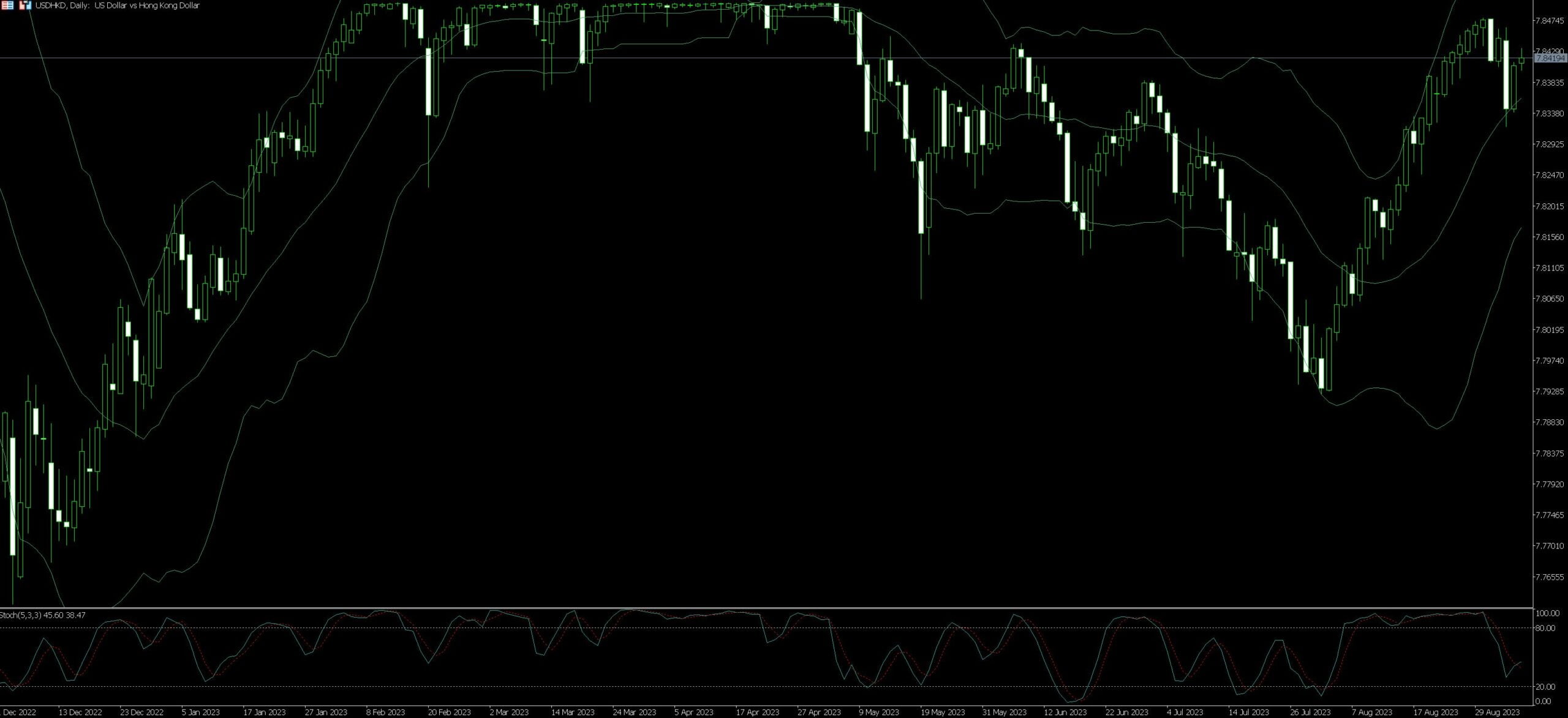
A successful USD/HKD trading plan begins with thorough research and analysis. Ensuring a comprehensive understanding of the pair’s historical trends, volatility, and the economic factors influencing their value is paramount. The United States dollar and Hong Kong dollar are intertwined with a striking range of economic variables, including interest rates, geopolitical developments, and the health of the global economy.
The robust base of this trading plan is an apt risk management strategy. Calculating risk based on individual trading capital and setting stop losses accordingly is non-negotiable. These stop losses should not just account for financial risk, but consider the volatile nature of the financial market, avoiding costly emotional decisions during fluctuations.
Trading without emotions allows for unimpeded execution of your trading strategy. This includes committing to entry and exit points established during planning stages and not being tempted to deviate during market volatility. Practising this level of discipline is pivotal to long-term success in USD/HKD trading and will encourage consistent profits, rather than sporadic, luck-based gains.
Stepping up the ladder of success further calls for continuous learning and adaptation. Market conditions are dynamic and constantly changing. By staying updated, regularly revising the executed trading plans, and adapting as per the new learning, traders boost their probability to identify profitable opportunities. Adapting the trading plan according to the changing market conditions can readily turn the tables in your favour.
Incorporating these elements into your USD/HKD trading plan and maintaining a consistent review process will better equip you to navigate the market and potentially secure steady profits. Notably, successful trading participants always keep themselves open to feedback, taking successes and losses both as an opportunity for further refinement.
4.1. Setting Realistic Goals and Expectations
Success in trading USD/HKD highly depends on crafting achievable goals and maintaining realistic expectations. By setting specific, measurable, achievable, relevant and time-bound (SMART) objectives, traders can effectively measure progress and achieve their trading aims with a clear strategy in place.
For instance, having a clear profit target on a monthly or annual basis is a key part of a trader’s roadmap. Defining such targets requires keeping in mind the volatility and unpredictability of the market. Traders should also consider the size of their investment, potential risks, and acceptable loss rate.
Risk Management is another critical part of setting meaningful goals. In trading USD/HKD, a trader should allow only a certain percentage of their portfolio to be at risk at any given time. In most scenarios, having a maximum of 2% of your portfolio at risk can help withstand unfavourable market swings.
It is equally important to understand that the forex market presents a myriad of opportunities on a day-to-day basis, thus, traders should not set expectations to earn profits from every single trade they make. A common misconception among new traders is that every trade leads to profit. However, even the most experienced traders understand that there will be losses, especially given the daily fluctuation of currency pairs like USD/HKD. Therefore, a good goal is to strive for overall profitability rather than expecting to win every individual trade.
Patience is a virtue, especially in trading USD/HKD. Forex trading is not a get-rich-quick scheme, hence, holding too lofty expectations may hinder proper decision making, leading to rash trading choices and avoidable losses.
Therefore, when setting goals in forex trading, it is crucial to plan for the long-term. A well-thought-out strategy, sustainable risk management, and patient execution often yields profitability in the long run. Engaging the services of a reputable broker as provided by BrokerCheck.co.za can offer vital guidance and resources to facilitate informed decision-making and goal setting.
4.2. Formulating a Regular Review Process
Trading the USD/HKD currency pair necessitates a pointed concentration on the principle of continuous monitoring and adjustment. The cornerstone of this principle is to establish a consistent appraisal procedure. In this context, the scrutiny process refers to an habitual monitoring of the forex activities, critically analysing the outcome of trading decisions and making necessary modifications.
The interweaved dynamics of global finance makes the forex market extremely volatile. Every minor shift in the macroeconomic parameters may lead to significant volatility in forex markets. For instance, changes in economic indicators, fiscal policies, or geopolitical events can induce a drastic swing in USD/HKD exchange rates.
Therefore, comprehending these variables and their potential impacts is crucial. But, that is not enough. Traders also need to be vigilant about the timing of these changes. Certain financial priorities or geopolitical incidents are scheduled. Knowing the specific timings can provide traders a competitive advantage. For example, the unveiling of the US Federal Reserve’s interest rate announcements or China’s Gross Domestic Product (GDP) data has a momentous effect on the USD/HKD pair.
Equally, the unpredictability of the market entails being capable of swiftly altering the trading strategies as per the needs. Hence, staying attuned to real-time forex news, quickly analysing its implications on USD/HKD, and then determining whether any adjustments in the trading strategy are required are integral parts of the regular review process.
Lastly, it is equally essential to regularly assess the performance of the trading strategy. Conducting a meticulous review of all the trades, whether successful or unsuccessful, can invariably provide insights for improvements. The continuous process of refining and enhancing approach is what keeps a trader successful in the long run. So, a regular review process is an indelible part of successful trading strategy for USD/HKD.
4.3. Continual Learning and Adaptation
In the world of USD/HKD trading, the landscape constantly evolves. The importance of continual learning and adaptation can’t be overstated in fluctuating markets. A cursory overview of stock reports and market analysis may suffice for hobby trading, but serious investors recognize the necessity of diving deeper. Enlightening oneself about the socio-economic developments of both the United States and Hong Kong builds an invaluable understanding of the forces influencing the USD/HKD pairing. This knowledge paired with a strong grasp of technical analysis offers traders a considerable edge.
Market trends, stock valuation, trade volumes – these components tend to fluctuate daily and possess the potential to impact the value of USD/HKD enormously. Vigorous participation in online trading forums, attending webinars, and following reputable trading blogs can equip traders with fresh perspectives.
Through constant adaptation, traders become resilient to market tremors and equipped to pivot strategies swiftly. Unexpected situations, geopolitical disturbances, or major economic decisions can suddenly reverse trading trends. Herein, those adept at adapting swiftly, altering their trading approach accordingly, can navigate smoothly through these choppy waters.
It’s critical to remember that successful trading isn’t just about buying low and selling high. It’s about breaking the conventions, stepping outside comfort zones, and venturing boldly where others hesitate. It’s about continual learning and adaptation. Keep refining, keep exploring, and most importantly, keep trading.