


Live Chart Of CAD/CHF
1. Understanding CAD/CHF Currency Pair
In the realm of Forex trading, the CAD/CHF currency pair assumes a remarkable significance. The Canadian Dollar, symbolized by CAD, acts as the base currency, while the Swiss Franc, symbolized by CHF, functions as the quote currency. A concrete understanding of the factors affecting the CAD/CHF pair can lead to profitable forex trading experiences.
One cannot ignore the impact of economic indicators while studying a currency pair like the CAD/CHF. For the Canadian Dollar, these indicators include key economic data like Gross Domestic Product (GDP), Unemployment Rate, and Consumer Price Index (CPI). At the same time, traders keenly observe CHF, tracking Switzerland’s economic performance through Employment Level, GDP, and Price Index data.
Additionally, the role of central banks in shaping CAD/CHF dynamics deserves mention. The Bank of Canada‘s interest rate decisions can significantly sway the strength of the CAD, whereas the Swiss National Bank contributes to the volatility of the CHF.
Energy resources have a profound influence on this pair. Canada, being a major oil exporter, sees its currency closely tied to oil prices. Conversely, Switzerland, not endowed with such resources, tends to exhibit a negative correlation with energy commodity prices. Hence, global oil price fluctuations can have direct implications on the CAD/CHF pair.
Manoeuvring the turbulent waters of forex trading requires sound technical analysis skills as well. Insightful charting techniques and rigorous observation of price movements and trends can lead to astute predictions and informed trading choices. Rules of Technical Analysis, such as using moving averages and candlestick patterns, find their application in trading the CAD/CHF pair.
Real-time global news updates are another element to follow. Critical political events in Canada or Switzerland, trade deals, international relations, and even weather conditions can trigger unexpected shifts in the CAD/CHF exchange rate.
While trading any currency pair, including CAD/CHF, managing risks effectively holds the key to sustainable success. Utilizing stop losses, trading with a disciplined approach, and not letting emotions guide trading decisions can mitigate losses and maximize profits.
1.1. Understanding the CAD (Canadian Dollar)
The CAD, known as the Loonie among traders, is swayed by various factors that impact its value. One of the primary parameters is the correlation between the CAD and oil prices. Being the world’s fourth-largest oil exporter, changes in crude oil prices strongly impact the Canadian economy, thus affecting the CAD. Traders often watch oil price trends to forecast the CAD’s behaviour.
Trade policies also hold sway over the CAD. Being closely knit to the US economy, any changes in American trade policy can have ripple effects on the Loonie. Traders need to stay abreast with international trade developments to anticipate shifts in the CAD’s value.
Additionally, the interest rates established by the Bank of Canada (BoC) often profoundly impact the CAD. Traders should monitor the BoC’s monetary policy as the CAD tends to strengthen when interest rates increase, and vice versa. As such, activity in the financial sector plays a key role in understanding the mechanisms driving the CAD.
External events such as global pandemics or economic crises also contribute to CAD’s volatility. These geopolitical happenings can make the currency more susceptible to fluctuations, making it crucial for traders to keep an eye on global news and events. By studying this interplay of factors, traders can gain a clear understanding of the CAD and successfully implement their trading strategies.
1.2. Understanding the CHF (Swiss Franc)
Diving into the world of the CHF (Swiss Franc), it’s paramount to recognize it as one of the major global currencies. Born out of Switzerland, a country known for its economic and political stability, CHF offers traders an avenue of relative certainty in the volatile market. Unlike other dominant currencies, CHF is managed by the Swiss National Bank, which maintains a mixed approach of hands-on and hands-off.
CHF’s Value in the Market cannot be overstated. For its size, Switzerland has a disproportionally large economy, making CHF a heavyweight. Not just that, Switzerland’s strong ties to more potent economic forces like Germany play a crucial role in bolstering the currency, fusing more robustness onto CHF’s frame.
Moreover, let’s go beyond the wall and just consider the fact that CHF’s performance is not necessarily linked solely to the performance of the Swiss economy. The franc interestingly often operates as a ‘safe-haven’ currency. This means that during periods of market stress or instability, investors and traders rush to buy it, thereby increasing its value. This is a testament to the world’s trust in the Swiss economy’s reliability.
Trading CAD/CHF, one should also take into account the Swiss Franc’s interest rates. The Swiss National Bank’s decisions can affect the value of CHF, influencing the CAD/CHF pair’s volatility. Defined by low interest rates, the landscape of CHF is unique and offers opportunities for carry trades, it has the potential of influencing buying and selling decisions.
Therefore, understanding the terrain that is CHF, filled with its distinct quirks and characteristics, is a stepping stone to successfully navigating the CAD/CHF trading journey. The careful consideration of its economic position, value, and ‘safe-haven’ status can tip the scales in identifying potential trading opportunities.
2. Principles of Trading CAD/CHF
Unmasking the codes behind CAD/CHF trading goes beyond simple understanding of the Canadian Dollar (CAD) and the Swiss Franc (CHF). Thorough comprehension of the global economies and how they play a pivotal role in shaping this pair’s movement is essential. Traders need to keep a keen eye on the economic indicators of both nations – including but not limited to GDP, unemployment rates, and policy decisions from their central banks.
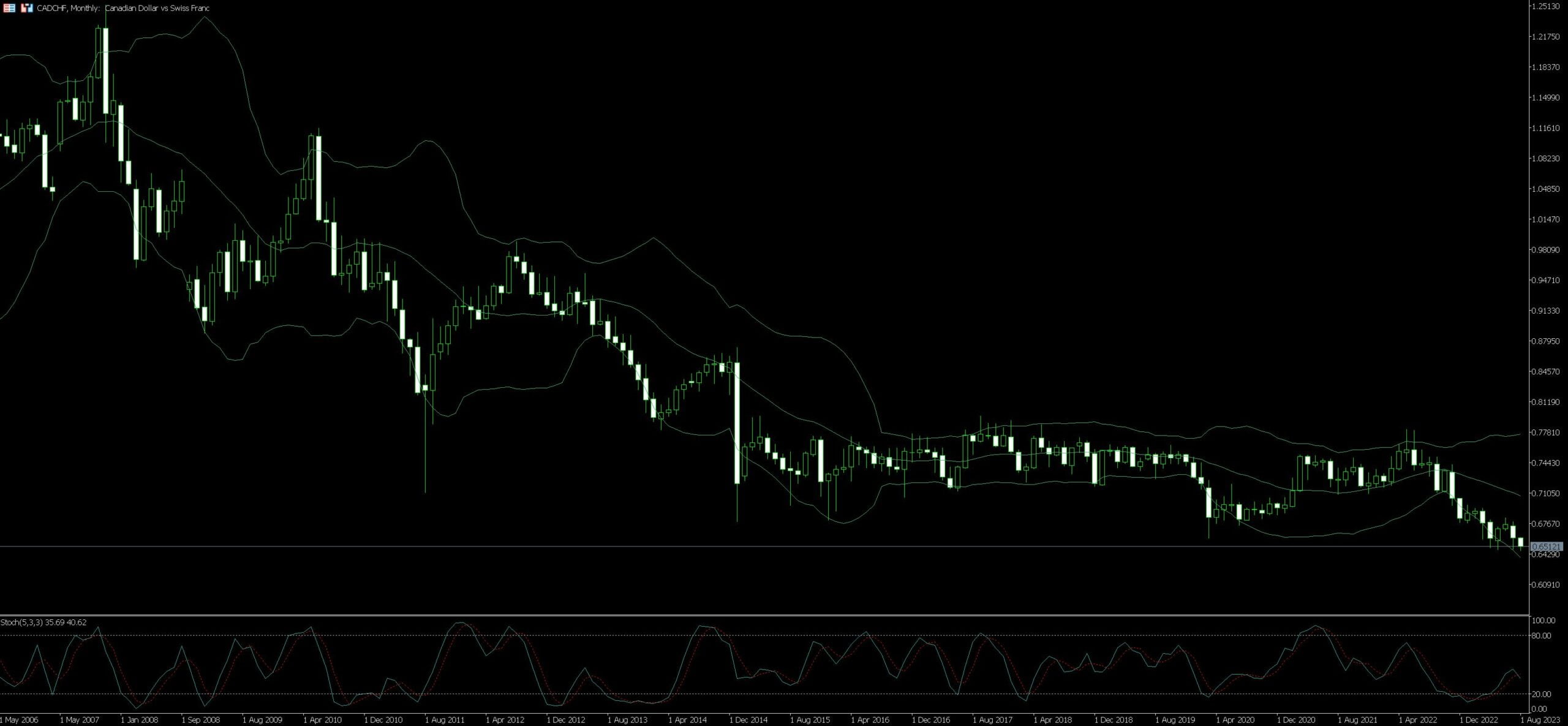
Technical analysis also plays a cardinal role in deciphering the pricing trends of the CAD/CHF pair. Often seen on a forex chart as oscillating line graphs, these trends provide valuable insights into the pair’s historical behaviour. Traders employing technical analysis tools such as moving averages, RSI, or Fibonacci retracements focus on identifying patterns that may predict future price action.
Although the CAD/CHF pairs are relatively stable, price volatility must not be underestimated. Economic events like interest rate announcements, political unrest, or changes in commodity prices (especially oil, given Canada’s status as a leading oil exporter) can result in sudden swings. It’s incumbent upon traders to use risk management strategies such as stop-loss and take-profit levels to protect their investments against these unforeseen price movements.
Navigating the CAD/CHF trading waters also demands the understanding of how market hours influence the pair. With Canada’s market opening hours falling within the U.S trading session, and Switzerland’s within the European, there is often an increased volatility during these overlaps. This period of increased market activity may offer potential lucrative trading opportunities but again, it’s imperative to tread with caution.
Trading CAD/CHF becomes less of a gamble and more of a calculated decision if these principles guide a trader’s course. With the perfect blend of economic insight and technical prowess, trading this pair can be navigated with confidence and precision.
2.1. Analysis of CAD/CHF Pair
Currency pairs hold much intrigue for traders, not least for their potential for significant real-time profits. A judicious survey of the CAD/CHF pair unlocks diverse trading opportunities.
An understanding of the economic correlation is the key. Canada, rich in natural resources, holds a commodity-driven economy. An upturn in oil prices boosts CAD; a downswing drags it down. Swiss Franc, by contrast, gains safety status in the volatile world of forex trading. CHF becomes a haven when global economic instability strikes.
Yet, while fluctuations occur, the long-term trend of CAD/CHF remains fairly stable. It allows for strategic decision-making, adjusting for current economic climate or future market predictions.
Another noteworthy aspect is the interest rate differential between the Bank of Canada (BoC) and Swiss National Bank (SNB). Currency values tend to flock towards higher interest yields. A difference in favor of CAD could signify a bullish market, and vice versa.
Assessing the political stability is equally paramount. Any turbulence in Canada or Switzerland sends tremors through the CAD/CHF pair, altering the dynamics.
Furthermore, technical analysis tools such as chart patterns, trend lines, and sentiment indicators provide valuable insights into market mechanics. Regular monitoring is necessary; sudden shifts might culminate in notable gains, or losses if overlooked.
Finally, it’s also beneficial to evaluate trading sessions. As the working hours of both countries barely overlap, the greatest volatility tends to occur during the North American session.
The CAD/CHF pair, with its distinct dynamics, unveils varied trading strategies. By scrutinizing key factors like the commodity prices, interest rates, political climate, and trading sessions, dedicated traders can strategically position themselves for potential profits. Diligent monitoring of technical indicators can aid in this endeavor.
2.2. Identifying Trading Opportunities
Market analysis remains the cornerstone of successful trading, especially in the realm of CAD/CHF. Understanding the economic indexes of both Canada and Switzerland opens the window to trading opportunities. For instance, an escalation in crude oil price, being Canada’s major export, can strengthen the CAD. On the contrasting end, Switzerland, armed with a strong banking and financial services sector, could experience currency fluctuation through these avenues.
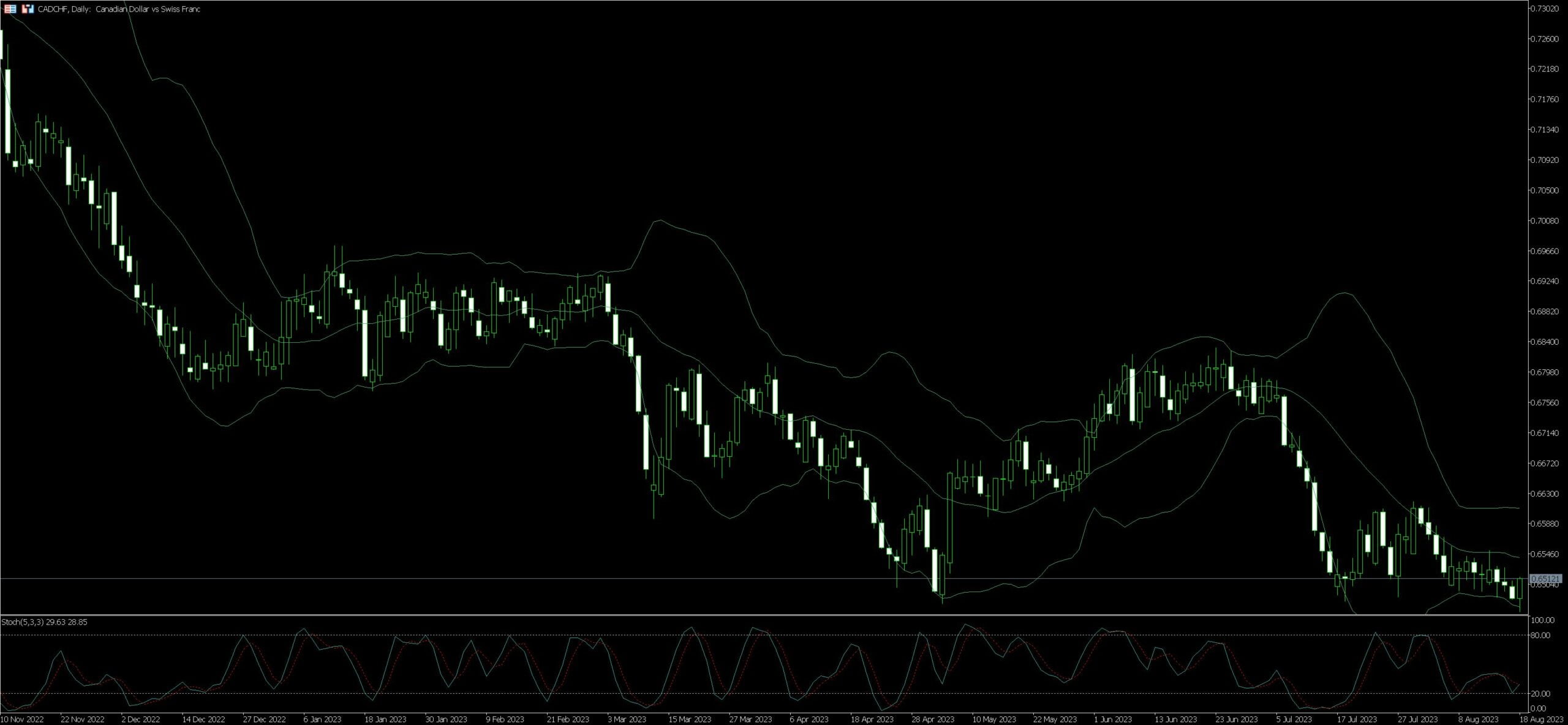
Technical analysis is another critical tool for identifying potential trades. With the use of technical indicators like Moving Averages, Relative Strength Index, or Bollinger Bands along with charts can predict price movements and signals of CAD/CHF. Keeping a vigil on these indicators allows traders to tap into the lucrative opportunities that arise out of volatility in this currency pair.
Monitoring financial news outlets will also serve traders well. Relevant bulletins, press releases, or government statements can trigger significant movements in foreign exchange markets. The inherent responsiveness of CAD/CHF to such economic and world events can therefore trigger trading signals that the savvy trader can capitalize on.
The effectiveness of these tactics lies considerably in the implementation, hence the emphasis on proper risk management. Limit orders, stop-loss orders, or even hedging techniques could be utilized to protect portfolios against adverse market moves while exploiting favourable currency price volatility. The proper mixture of patience, strategy, and alertness to market climates can make CAD/CHF a rewarding pair to trade.
3. Effective Trading Strategies for CAD/CHF
The currency pair of Canadian Dollar (CAD) and Swiss Franc (CHF) is one that beckons a meticulous strategy to navigate its intricate landscape. Trading CAD/CHF offers promising opportunities, yet calls for in-depth understanding and strategic planning to capture these benefits.
Trend Following forms the cornerstone of any successful strategy for trading currency pairs like CAD/CHF. This technique is pegged on the belief that markets tend to move in a specific direction over time. It involves identifying the trend and betting that it will continue. The trend could be upwards, downwards, or sideways, requiring a keen eye on the technical charts and the willingness to devote time for intensive analysis. Traders gain an edge by identifying patterns and riding these trends, making decisions based on factual data rather than unchecked speculation.
Swing Trading is another potent strategy for CAD/CHF trade. This approach rides on the price changes or “swings” in the marketplace. It capitalizes on gains from price patterns, involving the buying and selling of a security within a day or over several weeks. The driving force behind swing trading is market volatility. Hence, traders need to thoroughly analyze the market, identify possible trend reversals, and accurately predict future price movements.
A third tool in the arsenal for CAD/CHF trading is Scalping. Predicated on making numerous small profits on minor price changes, scalping is a strategy that can generate substantial gains when performed correctly. The basics of scalping involve the rapid opening and closing of positions. It requires precise timing and excellent judgment. In intense and fast-paced market hours, this strategy can bring in plentiful returns. Yet, it’s imperative for traders to keep monitoring markets closely since market conditions can significantly impact the effectiveness of this strategy.
Each of these strategies offers its own unique advantages and calls for different skills and commitment levels. The key to making the most of these strategies in the CAD/CHF market lies in thorough understanding, careful evaluation of market conditions, and the flexibility to adapt to new data and insights.
3.1. Utilizing Forex Indicators and Tools
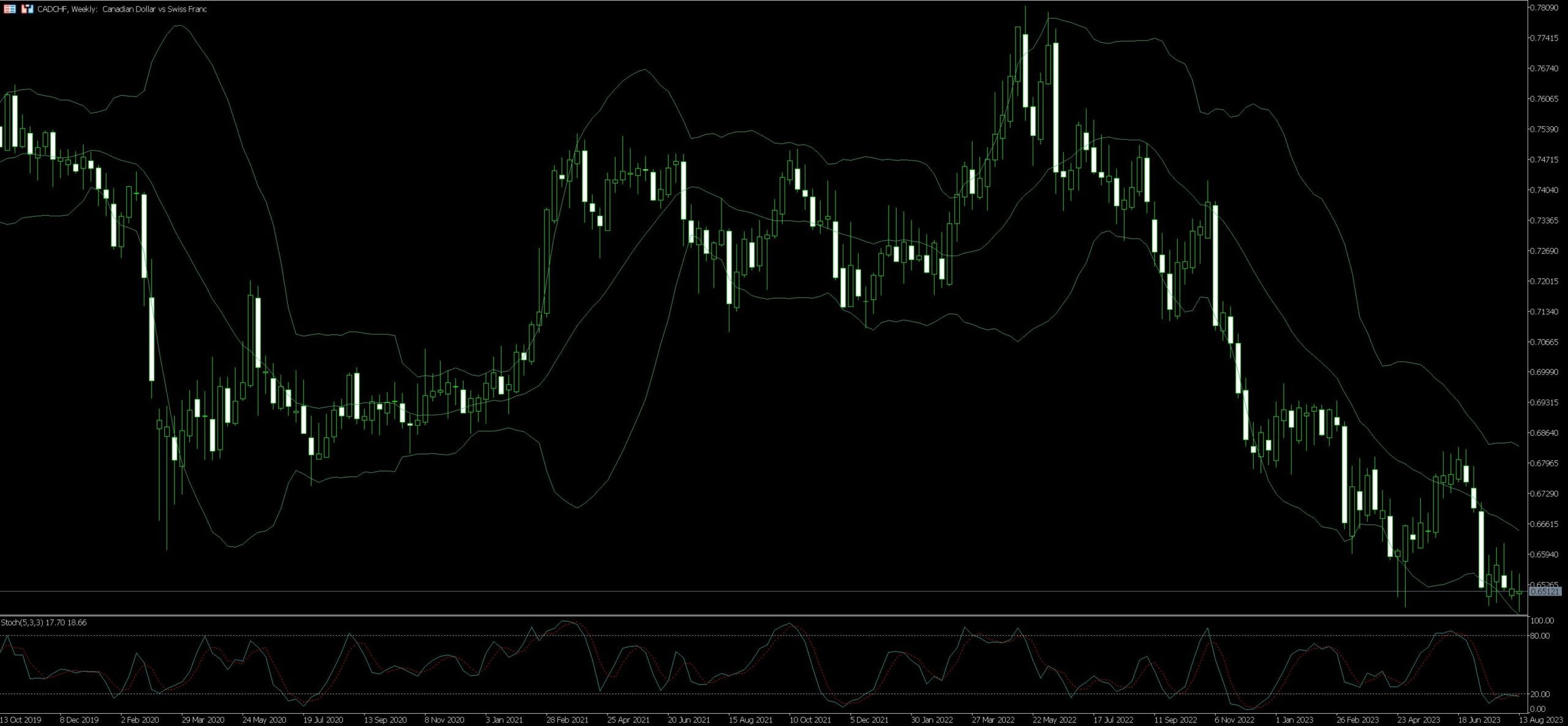
Investing time in understanding Forex indicators and tools is a step often overlooked, despite it playing a crucial role in trading successfully. When trading CAD/CHF, tools such as the Relative Strength Index (RSI), Moving Averages, and Bollinger Bands become highly essential.
Relative Strength Index (RSI) is a momentum indicator that measures the magnitude of recent price changes to evaluate overbought or oversold conditions. High RSI values may signal an impending downturn due to overbuying, while low RSI values hint at a possible upswing owing to overselling.
Moving averages provide support and resistance levels, useful in identifying market trends. Opt for shorter moving averages (like the 10-day moving average) for short-term trends or longer ones (like the 200-day moving average) for longer-term trends. Crossing of a short-term moving average above a long-term moving average indicates bullish signals, and vice versa.
Bollinger Bands comprise of a middle band (simple moving average) and two other bands (standard deviations) above and below it. These bands expand or contract based on market volatility. For instance, a contraction suggests low volatility and a possible surge in the future, enabling traders to ready their positions accordingly.
Combining these powerful trading signals from various Forex indicators and tools offers considerable insight into market trends, volatility, and potential trade opportunities, aiding traders in making informed decisions about CAD/CHF trades.
3.2. Application of Risk Management Strategies
When delving into the CAD/CHF trade, it is paramount to have a clear understanding and proper application of risk management strategies. The unpredictable ebb and flow of the financial markets, coupled with the unique characteristics of the CAD/CHF pair, necessitates a tactical approach to protecting your capital.
An indispensable tool to employ is the stop-loss order, set at a predetermined level that you are willing to let your traded pair reach before liquidation occurs to prevent further losses. For instance, you may opt to set it at a 2% decrease from your entry point. This is a practical method to limit your losses in the event of a downturn with the CAD/CHF pair.
Simultaneously, setting a take-profit order is recommended. This functions on the positive side of your trade, triggering an automatic sell once your pair hits a specific upper limit. This step secures any earned profits and shuts down your trade, hence preventing possible losses due to sudden market reversals.
A critical habit to cultivate is consistently reviewing and adjusting these levels aligned with market movements. These strategies aren’t pristine, but with regular monitoring and adjustment, they can significantly cushion against substantial losses. It is this framework of strategic planning that blunts the edge of potential risk while maximizing potential gains.
In terms of identifying potential trading opportunities, one should conduct regular market analyses. These may be technical, based on historical price data and market trends; or they could be fundamental, relying on economic indicators such as GDP growth rates, interest rates, or political stability. With the CAD/CHF pair, recognizing and understanding relevant Canadian and Swiss economic events would offer invaluable insights.
To further reinforce your risk management strategies, a demo trading account can provide an advantageous platform for practicing without endangering real capital. This flexible, real-time market simulation offers you the opportunity to test out your strategies, refine your understanding of the CAD/CHF dynamics, and ultimately become a more assured and effective trader. Indeed, the astute application of risk management strategies forms a crucial cornerstone for successfully trading the CAD/CHF pair.