

Live Chart Of GBP/CHF
1. Understand GBP/CHF Currency Pair
The fundamental understanding of the GBP/CHF currency pair is crucial for engaging in fruitful trade experiences. Both the British Pound (GBP) and Swiss Franc (CHF) are well established as high-value currencies in the global marketplace, making the combination lucrative. The correlation between these two currencies is largely tied to the economic performance and stability of their respective countries. For instance, the GBP’s value often fluctuates in accordance with UK’s economic conditions, including its politically driven elements. Similarly, the CHF is influenced by the status of Switzerland’s economy, renowned for its strong financial sector.
Yet, this currencypair is not directly proportional. Unique fluctuations characterize GBP/CHF, affected by major political events or changes within their diverse economies. This anomaly makes it even more compelling and versatile for experienced traders seeking to capitalize on forex movements.
Currency trading with GBP/CHF can be notably more volatile than pairing with major currencies. The economic disparities between the UK and Switzerland create a potent trading environment, destined for significant urban and rural shifts. This leads to a higher potential return, albeit with a corresponding risk level. Proper risk management is therefore essential to ensure success in trading this pair.
Key economic indicators to monitor when trading GBP/CHF include fiscal policies, macroeconomic data, political instability and public debt. These amongst others can have pronounced impacts on the currency pair’s value. Therefore, keeping a close eye on such market factors is paramount in navigating trades with the GBP/CHF.

1.1. Basics of GBP/CHF
GBP/CHF showcases the relationship between the value of the British Pound and the Swiss Franc on the trading platform. A significant currency pair within the Forex market, it enables the measurement of the Pound’s strength against the Franc. The influence of this pair is dictated by economic indicators, political climates, and market sentiment, amongst other factors. These factors often introduce volatility, opening doors to potentially profitable trading opportunities.
The prowess of the British economy, marked by key sectors like manufacturing and services, drives the value of the GBP. The Swiss Franc, on the other hand, is seen as a haven currency due to Switzerland’s economic stability, stringent financial regulation, and robust banking sector. Trading GBP/CHF effectively requires an in-depth understanding of these influences, as well as meticulous market analysis.
Traders usually scrutinize economic calendars to anticipate major events that could potentially impact GBP/CHF. Employment data, inflation reports, interest rate decisions, and geopolitical news are amongst the critical information that move this pair. The understanding and prediction of these dynamics translate into profitable trades. Chart patterns, indicators, and trading systems further help forecast these currency movements. In essence, the mastery of GBP/CHF trading, like other Forex pairs, is an amalgamation of knowledge, skills, and market savviness.
1.2. Factors Influencing GBP/CHF Value
Monetary Policy plays a significant role in determining the value of GBP/CHF. Central banks of both UK (Bank of England) and Switzerland (Swiss National Bank) implement policies that greatly affect the value of these currencies. If Bank of England increases interest rates but Swiss National Bank doesn’t, the GBP would generally strengthen against the CHF and vice versa.
Economic Indicators like GDP, employment rates, and inflation rates impact the GBP/CHF pair. For instance, a strong GDP report from the UK would potentially strengthen the pound against the franc, and a poor employment report from Switzerland could weaken the franc against the pound.
One large determining factor is the Safe Haven Status of the CHF. In times of economic uncertainty or geopolitical tension, investors often flock to the Swiss franc as it’s considered a ‘safe haven’ currency, increasing its value relative to the pound.
The Political Climate in the UK and Switzerland also has a direct influence. Changes in government, political uncertainty, or unexpected policy decisions can lead to volatility in the GBP/CHF value.
Finally, the Strength of Other Currencies such as USD and EUR also influences GBP/CHF. For instance, if USD strengthens significantly, it may lead to weakening of both GBP and CHF but not necessarily at the same rate.
Remember that while predicting currency movements can never be certain, understanding these factors allows traders to make more informed decisions.
2. Mastering GBP/CHF Trading Strategies
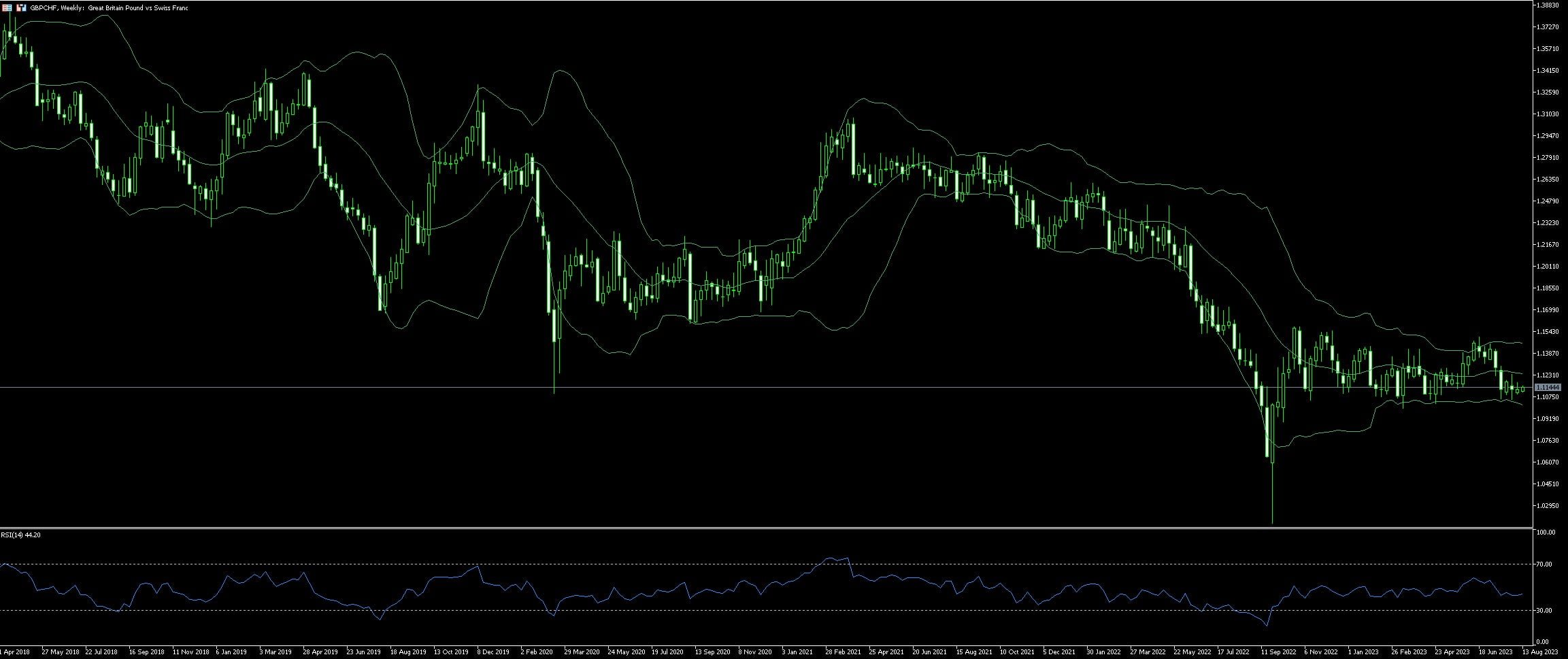
Honing your skills in trading the GBP/CHF pair demand both knowledge of the forex market and an understanding of this unique currency pair’s behavior. The significant interplay between the economies of the United Kingdom and Switzerland forms a complex market landscape best navigated through effective strategies. Engaging in number crunching and in-depth analysis, traders gain insights into the nuances that define the GBP/CHF pair.
To start, one of the widely adopted strategies is Technical Analysis. By studying historical currency price patterns and market trends, this strategy leverages statistical indicators and mathematical algorithms to predict future price movements. GBP/CHF traders often use tools like Moving Averages, Bollinger Bands, and Fibonacci Retracement levels to identify profitable trading opportunities.
Another commonly-used trading strategy is Fundamental Analysis. This approach takes into account economic indicators, political events, and major news releases that impact the GBP and CHF’s value. Key focus areas include interest rate decisions by the Bank of England and the Swiss National Bank, employment statistics, and economic growth indicators.
Yet another strategy is the Carry Trade, favoured by long-term traders. Essentially, a trader borrows a currency with a low-interest rate (CHF) to purchase a currency yielding a higher interest rate (GBP) with the intent to profit from the difference. However, the carry trade strategy requires careful monitoring as unexpected market fluctuations may erode potential gains.
The Breakout Strategy focuses on identifying significant price movements in a specific direction following a period of consolidation. Traders look for such ‘breakouts’ to place trades that align with the new trend. Monitoring price channels and trend lines often facilitates this.
Both experienced and newbie traders benefit from employing Risk Management Techniques, a critical aspect of any trading strategy. These include setting stop-loss orders to limit potential losses, trailing stops to lock in profits, and never risking more than a small percentage of your trading capital on a single trade. This, in turn, fortifies their trading portfolio against unpredictable market movements.
Trading the GBP/CHF pair can offer lucrative opportunities for those willing to study and adapt to its unique characteristics. Leveraging the right blend of strategies can assist traders in making educated decisions and maximizing their chances of achieving trading success.
2.1. Fundamental Analysis
Fundamental analysis forms a cornerstone of forex trading and should be a key area of focus when approaching GBP/CHF strategies. Traders rely heavily on scrutinizing economic data from both the UK and Switzerland to predict future price movements. It’s about delving beyond the surface to understand the health of these two economies.
Studying a variety of factors, ranging from interest rates, inflation rates, political stability, and economic performance, allows traders to assess the ‘real’ value of a currency pair like GBP/CHF. As the two countries’ central banks announce policy changes or economic reports, the market’s reaction creates trading opportunities. Furthermore, geopolitical events significantly influence sterling and franc’s relative values; an election or referendum can dramatically swing the pair.
News events also wield considerable clout in determining the GBP/CHF price trajectory. With scheduled events such as the Bank of England (BOE) and the Swiss National Bank (SNB) monetary policy decisions, traders can anticipate market movements. Reacting swiftly to such announcements is crucial in executing a successful trade with the GBP/CHF pair.
Factoring in the financial health of the broader European region is equally integral to GBP/CHF trading decisions. Given that Switzerland isn’t part of the European Union (EU), shifts in the Eurozone can create opportunities for savvy traders. This includes watching for economic uncertainty amongst EU nations, which may lead to the Swiss franc’s attraction as a ‘safe haven’ currency.
Incorporating fundamental analysis into your trading approach for the GBP/CHF pair not only increases your understanding of the market context but can guide robust and more informed forex decision making.
2.2. Technical Analysis
Technical analysis plays a pivotal role in trading GBP/CHF. Embrace in-depth observations and interpretations of past market trends and statistics. This predictive approach paves the way for informed trading decisions.
Decoding GBP/CHF charts presents an excellent venue for tracking market trends. Tools such as oscillators, moving averages, and trend lines help in spotting potential profit zones. Be it a bullish outbreak or bearish take-over, technical analysis aids in navigating through the volatile world of Forex.
Analysing the highs, lows, and currency volumes fosters an understanding of market patterns, crucial in identifying periods of consolidations, continuations, and reversals. Knowledge of these would empower you to place trades with greater precision. Your utilisation of candlestick patterns gives insights into price movements, adding another layer of certainty.
Another significant asset in your trading armoury is Fibonacci retracement tools. By marking significant highs and lows, Fibonacci ratios forecast potential support and resistance levels. By observing these levels, you enable the anticipation of where the price might react.
Indicators like the Relative Strength Index (RSI) or Moving Average Convergence Divergence (MACD) further augment your technical foresight. These indicators notify of overbought or oversold conditions, assisting in pinpointing potential trading opportunities in the GBP/CHF market.
Understanding these tools and techniques ideally increases the likelihood of securing profitable trades. Strive for technical excellence, harnessing the unperturbed power of analysis in your GBP/CHF trading operations.
3. Risk Management in GBP/CHF Trading
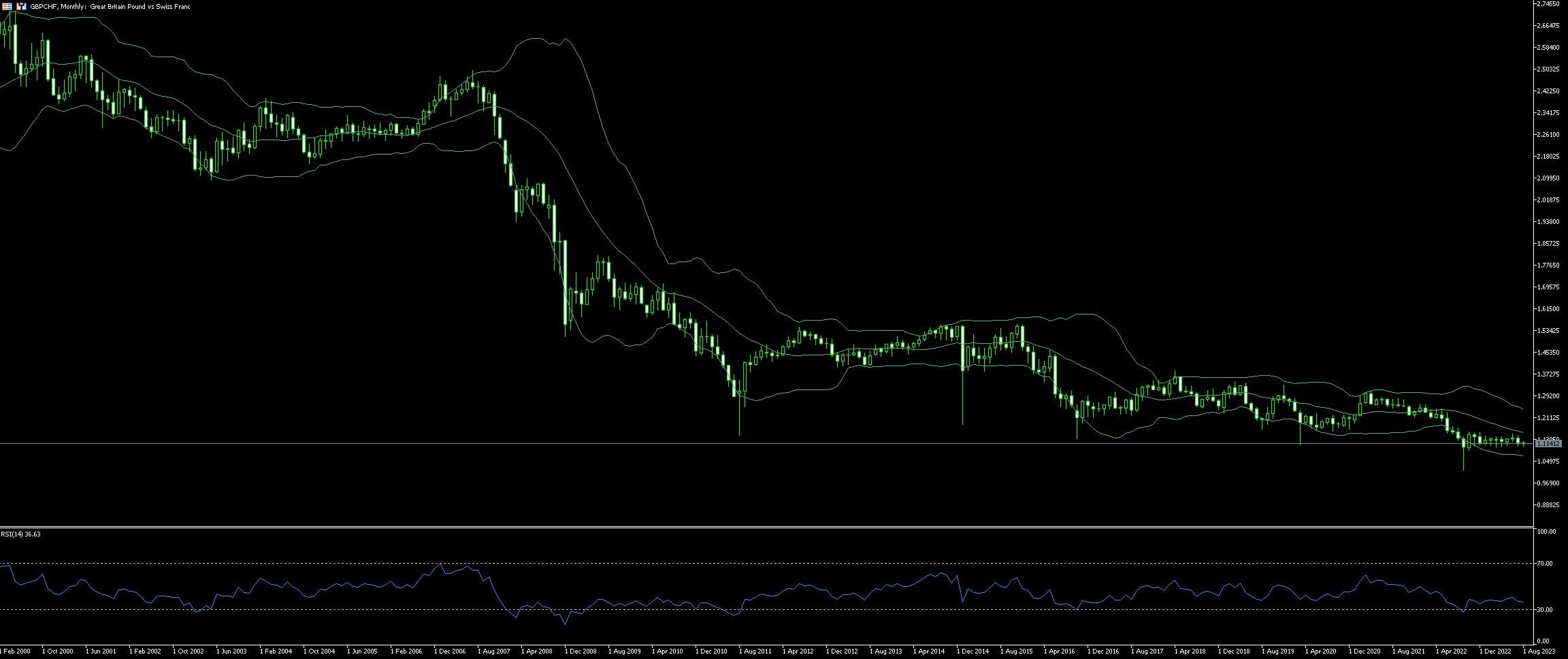
Risk management in GBP/CHF trading cannot be stressed enough. Adopting a systematic risk management approach reduces the chances of a heavy loss that could potentially blow a significant hole in your trading capital. GBP/CHF – a highly volatile pair, demands a solid understanding of potential pitfalls, making risk management incredibly crucial in this scenario.
Leveraging stop losses should be non-negotiable while trading GBP/CHF. A sudden market swing can easily wipe out gains without a stop loss in place. The main principle is not to risk more than you could afford to lose – usually a small fraction of your capital. Hence, setting a suitable stop loss plays a decisive role in safeguarding your investment.
Trade volatility must also be properly managed. GBP/CHF, given its nature, often experiences substantial price changes within short periods. Hence, understanding the volatility and planning your trade size accordingly is recommended. For instance, in periods of high volatility, you may want to consider reducing your trade size to control risk.
In an ideal world, a trader could predict every market move. The reality, however, is far from ideal. Unexpected market changes will come. It’s not about playing a guessing game but playing a defensive game – one where you are prepared and have every possible scenario covered. Here, hedging strategies can be an effective risk management tool, helping to balance out any potential losses.
Finding balance between potential reward and risk is another key aspect. Adjusting your risk-reward ratio according to market conditions can guard against exuberant risks. Many traders stick by the 1:3 rule, where the potential reward is three times the amount risked.
Account diversity is another shield against risk. A common saying among traders is ‘Don’t put all your eggs in one basket.‘ This applies here, too.
The trading world is fraught with risk, but with systematic strategies, a disciplined mindset, and comprehensive risk management tactics, it becomes far easier to manage potential setbacks and gain rewards in GBP/CHF trading.
3.1. Importance of Risk Management
In the realm of GBP/CHF trading, risk management is an integral facet that cannot be downplayed. This is a unique layer of strategy which facilitates smart decision-making, contributing immensely to a trader’s long-term success. It cannot be overstated that a calculated approach to risk management is the spine that supports your entire trading endeavour.
Contemplating the volatile nature of the FX markets, especially currency pairs like GBP/CHF, preventing financial losses is crucial. Preserving your trading capital ensures that you have sufficient backing to capitalize on profitable trades when they arise. Trading is not a sprint; it’s a marathon. You should operate on the mantra of survival first, profit later.
Developing a robust risk management plan necessitates understanding the vagaries of the GBP/CHF pair. This implies recognizing the impact of economic indicators, market news, and other macroeconomic factors on the price of the pair. A well-calculated position sizing strategy can prevent excessive losses even when the market moves against you. By limiting your risk per trade to a specific percentage of your trading capital, you ensure the longevity and resilience of your trading account.
At its core, risk management is about balance. Balance between risk and reward. Balance between daring to take advantage of opportunities and caution against potential losses. It’s a line carefully tread by the most successful traders. Herein lies the art of trading – it’s not just about predicting market movements; it’s also about managing the potential pitfalls along the way.
Striking this balance requires practice, experience, and discernment. Luckily, trading platforms offer many tools to facilitate this. They allow the setting of stop loss/take profit levels to automatically close your position at desired prices. They provide risk analyzer tools to predict the potential downside of a trade. Embrace these tools and incorporate them into your trading strategy for efficient risk management.
At the end of the day, trading GBP/CHF is an expedition fraught with highs and lows. A focused, consistent approach to risk management is what separates the stalwart traders from the floundering ones.
3.2. Risk Management Tools and Techniques
One primary component in the world of trading GBP/CHF is the implementation of risk management tools and techniques. It is crucial for every trader to understand the implications of trading in a volatile forex market. One effective method of controlling risk is through stop orders. A stop order restricts losses by establishing a set point to exit trade when the market trends are unfavorable.
Another pivotal tool in trader’s arsenal is the take profit order, allowing traders to lock in their gains when the market reaches a pre-determined level. Furthermore, traders often employ leverage, a double-edged sword that can magnify both gains and losses. While, on one hand, it allows trading larger positions, on the other hand, it may amplify the losses if a trade goes against one’s predictions.
Apart from this, a seasoned GBP/CHF trader must use hedging strategies to minimize potential losses. One common technique involves opening a position that offsets an existing one. Notable is how these strategies act as an insurance policy against unforeseen market fluctuations.
In the world of trading GBP/CHF, the use of market analysis plays a significant role in anticipating market movements. Traders rely on both fundamental and technical analysis to navigate the market effectively. While fundamental analysis scrutinizes economic indicators and political events, technical analysis uses charts and indicators to identify trends and patterns.
Moreover, risk/reward ratio helps traders assess the potential risk against the likely profit of a prospective trade. Determining an acceptable risk/reward ratio leads to making informed trade decisions.
Lastly, the use of automated trading systems offers a more systematic approach for risk management. These systems carry out trades based on pre-set rules, reducing the impact of emotions on trade decisions and ensuring consistency. Nevertheless, these systems require regular monitoring to adjust to changing market conditions. As such, the utilization of these risk management tools and techniques can significantly improve trading outcomes in the GBP/CHF market.
4. Choosing the Right Broker for GBP/CHF Trading
Choosing the right broker for GBP/CHF trading requires a careful analysis of several crucial aspects. Regulation should be one of the foremost considerations. This signifies the legitimacy of the broker and affords protection to the trader. Traders should ensure their chosen broker is regulated by an established authorities like the Financial Conduct Authority (FCA) or the Cyprus Securities and Exchange Commission (CySEC).
Additionally, the pricing and spreads offered by the broker should be competitive. In forex trading, the spread can really impact the profitability, particularly in pairs like GBP/CHF where market movements can be substantial. A competitive spread can significantly mitigate potential losses.
Traders should also consider the types of accounts that the broker offers. Some brokers offer different levels of accounts each with their own features and benefits. A broker offering a variety of account types shows flexibility and caters to different types of traders.
Trading Platforms are another important aspect to consider. These vary, each with their own strengths and weaknesses. The preferred trading platform of a trader must be compatible with the broker chosen.
Lastly, proper customer support is essential. Issues, questions, or concerns should be addressed quickly and efficiently by the broker. Services rendered should be available in multiple languages and reachable 24/7.
4.1. Factors to Consider in Choosing a Broker
Choosing a broker for your GBP/CHF trading endeavours is no small task. There are a handful of key considerations to take into account that can significantly influence the outcome of your trades. Execution speed is perhaps one of the most critical factors. High-speed execution ensures that the trades are completed at the exact prices intended, effectively preventing slippage or unwanted losses.
Reliability cannot be overemphasized when it comes to choosing a broker. The broker should be licensed by a trusted regulatory body and have a history of stable operations under varied market conditions. It would prove invaluable to look at reviews and expert opinions to assess the reliability of a broker.
Another crucial factor is the commission structure on offer. The spread or the difference between the buying and selling price impacts profits directly. A broker with competitive and transparent commission structures is a desirable choice. Besides, ease of deposit and withdrawal should be considered. It’s crucial to choose a broker that provides a secure, simple, and swift method for conducting monetary transactions.
As a trader, educational resources available with the broker can make a significant difference in your trading strategies. The resources and tools available for clients to learn from and utilize, such as real-time news, free trading signals, strategy builders, and analysis tools, can offer a competitive edge.
To pivot towards the impact of technology, the quality of the trading platform is a significant factor. An intuitive, user-friendly platform that allows seamless trading, charting functionalities, and customization, enhanced with mobile trading capability, could give traders the flexibility they need.
While these factors provide a guiding map on your journey to find an excellent broker for GBP/CHF, each trader might prioritize certain factors differently based on personal trading style, risk tolerance, and goals.
4.2. Cost and Fees
When delving into the field of GBP/CHF trading, it’s essential to bear in mind the role of costs and fees. These charges are typically sneakily tucked away in the fine print, making them easy to overlook. However, they can significantly affect your returns.
Transaction costs in Forex trading mainly comprise spread and commission. The spread is the difference between the bid price (what you’ll get when selling a currency pair) and ask price (what you’ll pay to buy a currency pair), while the commission is the fee charged by the broker for facilitating the trade.
One must not make assumptions about these fees; they can vary widely between brokers. Some offer zero-commission trading but earn through slightly broader spreads. There could also be other costs like overnight fees, inactivity fees, or fees for depositing and withdrawing funds.
The specifics of these costs are usually clearly outlined on the broker’s website. Therefore, conducting a thorough examination and comparison of various trading platforms’ fee structures is fundamental. Use online tools and resources to facilitate this, one such resource is our comparison where you’ll find comprehensive broker reviews, comparisons, and insights to help you on your trading journey.
Remember, successful GBP/CHF trading isn’t just about the mechanics of buying low and selling high. It’s about mastering the art of cost-efficiency, being conscious of how much you’re spending to make those trades, and ensuring it doesn’t eat into your overall profits. Choose wisely and with full awareness of the costs and fees involved in trading.